


Investing in Robotics and Drone Tech
Robotics and drone technology are moving from innovation cycles into operational reality, making investing in robotics and drone tech increasingly relevant for both founders and investors. What once lived in research labs, pilot programs, and controlled environments is now deployed at scale across logistics, manufacturing, energy, agriculture, public safety, and defence. For founders, this creates room to build companies that solve hard, practical problems. For investors, it represents an asset class with long-term relevance, but only when approached with discipline.
In this blog post, Rodller examines how robotics and drone tech are converging into a single investment space, where value is driven by deployment, reliability, and integration rather than novelty. We look at the main commercial and industrial applications, explore defence as a powerful validation case, and outline what founders and investors should focus on when evaluating opportunities in this sector.
This is not a market driven by storytelling. It is driven by reliability, integration, and economics. The companies that succeed are not those with the most advanced prototypes, but those whose systems work every day in unpredictable conditions, fit into existing workflows, and justify their cost through measurable outcomes.
Why Robotics and Drones Are Becoming One Investment Area
Robotics and drones are often discussed separately, but from an investment perspective, they share core characteristics. Both are cyber-physical systems that combine hardware, software, data, and operations. Both face similar challenges around deployment, regulation, safety, and maintenance. And in both cases, the economic value rarely sits in the machine alone.
A mobile robot in a warehouse and a drone inspecting a power line solve different problems, but they face the same questions:
- Can the system operate reliably in real conditions?
- How much human intervention is required?
- How well does it integrate with existing processes?
- Does it reduce cost, risk, or time in a way buyers can measure?
As these technologies mature, the line between robotics and drones blurs. Drones are essentially mobile robots operating in three dimensions. The same logic applies to autonomy, fleet management, data processing, and lifecycle support.
For investors, this convergence means that lessons learned in one domain often translate to the other.

Where Robotics and Drones Are Being Used Today
Industrial and warehouse robotics
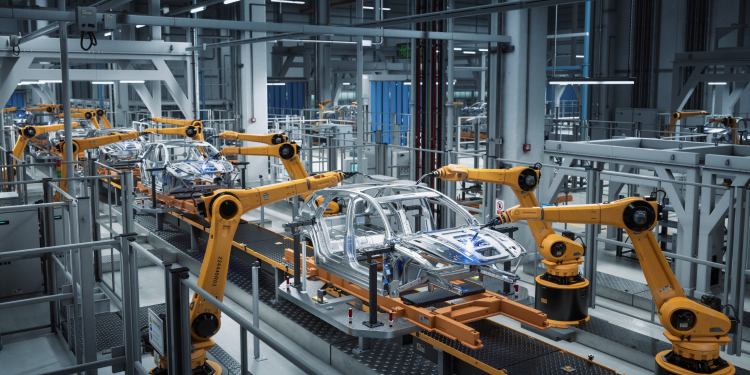
In logistics and manufacturing, robotics adoption is driven by labor constraints, safety requirements, and pressure on margins. Autonomous mobile robots, robotic arms, and hybrid systems are used for picking, transport, assembly, and inspection.
What matters is not automation for its own sake, but throughput, accuracy, and uptime. Companies adopt robotics when systems reduce cost per unit or increase capacity without adding complexity.
From an investment perspective, the strongest robotics companies focus on narrow, repeatable use cases. They design systems that can be deployed across many sites with limited customization. This is where scale appears.
Field robotics and inspection
Outside controlled environments, robotics becomes harder but more defensible. Robots used in energy, construction, mining, and infrastructure inspection must operate in unstructured conditions.
Here, value comes from safety and continuity. Robots replace or support human workers in dangerous environments. Downtime is expensive. Errors carry risk.
The same logic applies to drones used for inspection and monitoring. Whether airborne or ground-based, the system is valuable when it reduces exposure and improves decision speed.
Drones for mapping, monitoring, and surveying
Mapping and surveying remain among the most established drone applications. Construction, agriculture, mining, and land management rely on drones to create accurate, up-to-date views of assets and terrain.
The competitive advantage is rarely the drone itself. It sits in data processing, change detection, and integration with planning or maintenance tools. Raw images are easy to capture. Actionable insight is not.
This pattern mirrors robotics more broadly. Data and workflow integration create durability.
Agriculture and environmental use cases
In agriculture, drones and robotics address labor shortages and the need for precision. Monitoring crops, targeting inputs, and tracking yields improve efficiency without expanding land use.
Environmental monitoring follows similar logic. Robotics and drones are used to assess forests, coastlines, water systems, and disaster areas where human access is difficult or risky.
These sectors tend to have fragmented buyers and tight budgets. Solutions must be simple, robust, and cost-aware. Companies that over-engineer often struggle to scale.
Defence
Defence does not define the entire robotics and drone market, but it clearly proves their operational value.
The Russian–Ukrainian war shows how fast robotics-driven systems, especially drones, move from support tools to core infrastructure. Military units use drones for reconnaissance, targeting, logistics, and direct engagement. Ground robots assist with transport, demining, and close-range reconnaissance.
Several lessons from this environment extend far beyond defence.
First, adaptability beats perfection. Teams that modify systems quickly stay relevant, while long update cycles slow others down. The same principle applies to civilian robotics operating under changing regulations or shifting operational needs.
Second, attrition reshapes economics. In defence, operators expect to lose drones regularly. In commercial settings, systems last longer, but the key lesson remains the same: total cost of ownership matters more than technical specifications.
Third, resilience defines usefulness. Defence deployments expose challenges such as signal interference and degraded navigation. Industrial sites, dense cities, and remote locations face similar issues. Strong autonomy and fail-safe behavior add value across all sectors.
Finally, defence highlights the importance of system thinking. A single drone or robot delivers limited value on its own. Integrated systems that link sensing, decision-making, and execution create real advantage.
For investors, defence exposure can speed up learning and build credibility. At the same time, it brings regulatory and customer concentration risks. Investors should treat defence as one part of the market, not the whole story.
Business Models That Work at Scale
Across robotics and drone tech, certain business models consistently outperform others.
Recurring revenue instead of one-off sales
Selling hardware once rarely builds a durable company. The strongest businesses generate recurring revenue through software, fleet management, analytics, maintenance, and operational support.
This aligns incentives. Customers pay for outcomes. Companies stay engaged long after deployment.
Vertical focus
General-purpose platforms struggle with price pressure and weak differentiation. Vertical solutions built for specific industries or tasks tend to scale better.
This applies equally to:
- Warehouse robotics
- Inspection drones
- Agricultural platforms
- Defence-specific systems
Focus allows teams to understand real user needs and optimize accordingly.
Services and operations as part of the offer
Many buyers do not want to operate complex systems themselves. Managed services, training, and operational support reduce friction and speed adoption.
In both robotics and drones, services often stabilize revenue and deepen customer relationships.
What Investors Should Examine Closely
Robotics and drone companies can look impressive in demonstrations. Reality appears during deployment.
Key areas to examine include reliability, support burden, and integration effort.
How reliable is the system in daily operations? How much human involvement does it need to run effectively? To what extent does each customer require customization?
Regulation also matters. Drones face airspace rules. Robotics face safety standards and workplace compliance. Companies that treat compliance as an afterthought struggle to scale.
Supply chain resilience is another factor. Defence experience highlighted the risks of dependency on single suppliers or sensitive components. This applies across sectors, especially as geopolitical tensions increase.
Where Founders Can Still Build Strong Positions
Despite increased competition, the space is far from closed.
Strong opportunities remain in:
- Workflow automation around robotics and drones
- Data interpretation and decision support
- Fleet health, maintenance, and lifecycle tools
- Resilient autonomy and communication
- Compliance and operational simplicity
Founders who reduce complexity for users often outperform those chasing technical extremes.
Final Thoughts…
Investing in robotics and drone tech is not about betting on futuristic ideas. It is about backing systems that already work and will be needed more as labor becomes scarce, infrastructure ages, and safety expectations rise.
Defence has accelerated learning and exposed what matters under pressure. But the real opportunity is broader. Logistics, industry, agriculture, energy, and public services all rely increasingly on robotic and drone systems.
For founders, success comes from execution and integration. For investors, returns come from patience and realism. This sector rewards those who understand operations, not just innovation.
At Rodller, we believe that robotics and drone tech succeed when teams focus on execution, capital discipline, and long-term value. Clear strategy, realistic growth, and solutions that work in real conditions matter more than bold claims. Strong teams, the right partnerships, and well-structured capital support sustainable scale.
Robotics and drones are no longer optional technologies. They are becoming part of how modern systems function.
About Rodller
Rodller (www.rodller.com) provides Digital Marketing, Fundraising and Application Development Services. With offices in Singapore and France we serve both Startups and Fortune 2000 firms. We use a next-generation Portal to combine the use cases of Digital Marketing, Fundraising and Application Development in tangible processes.





Leave a reply