

The Iran War and the New Investment Landscape in Southeast Asia
Southeast Asia has been one of the biggest beneficiaries of companies rethinking their global supply chains. Vietnam, Malaysia, Thailand and Indonesia have attracted new manufacturing investment, while Singapore has strengthened its position as a regional business, financial and logistics hub. Labour costs, market access and infrastructure have been central to that story.
The war between the United States and Iran is adding another variable: energy security. Disruption around the Strait of Hormuz is putting pressure on oil and gas supplies, shipping and insurance costs, while exposing how differently Southeast Asian economies are positioned when access to critical resources becomes less predictable.
Before the crisis, around 60% of Southeast Asia’s crude oil imports and one-third of its gas imports came from the Middle East. Around 45% of the region’s oil-product supply was also linked to Middle Eastern crude. Malaysia, Indonesia, Thailand, Vietnam, the Philippines and Singapore have very different energy systems, resource bases, industrial structures and fiscal positions.
In this blog post, Rodller looks at how the Iran war could change the investment equation across Southeast Asia, from energy dependence and logistics to manufacturing competitiveness, infrastructure and supply-chain diversification.
Energy Is Changing the Investment Equation
For years, companies comparing Southeast Asian manufacturing locations have focused on labour costs, land, tax incentives, infrastructure, access to customers and skilled workers. Energy has generally been treated as another operating cost.
The current disruption makes that approach harder to sustain. Energy runs through almost every industrial activity, while the IEA says the Middle East disruption has already affected refining, petrochemicals, power generation and cooking fuels across Southeast Asia. Many regional refineries are also configured to process medium and heavy Gulf crude, limiting their ability to replace disrupted supplies quickly.
For companies making long-term investments, today's energy price is only part of the calculation. Management also needs to consider whether the local grid can support future industrial demand, how diversified energy sources are and how quickly alternative supplies can be secured.
A market with lower labour or property costs can lose some of its advantage when companies face greater exposure to imported energy and vulnerable trade routes. Reliable power, established infrastructure and diversified supply can become more valuable, particularly for capital-intensive businesses that cannot easily relocate once a facility has been built.
Southeast Asian Markets Face Different Levels of Energy Exposure
Malaysia enters the crisis from a relatively favourable energy position. It has domestic resources, significant LNG export capacity and an established manufacturing base, particularly in electronics and higher-value industrial activities. Higher global energy prices can generate additional export revenue, providing a buffer that is not available to economies almost entirely dependent on imported fuel.
That advantage is not absolute. Malaysia still imports crude and petroleum products and relies heavily on maritime trade. Around 90% of its external trade is transported by sea, leaving the economy exposed to higher shipping costs even when energy exports provide some protection.
Indonesia has a different set of strengths. Its large domestic market and natural-resource base provide considerable economic scale, while policies encouraging domestic processing of resources such as nickel have created new industrial opportunities. Imported refined fuels remain important, however, leaving the country exposed to international energy prices.
Thailand has one of the region's deepest manufacturing ecosystems, particularly around automotive production. ISEAS estimates that 59% of Thailand's oil supply and 28% of its gas supply come from the Middle East.
The Philippines faces greater energy exposure. Around 95% of its oil supply comes from the Middle East, according to ISEAS. Its services sector and domestic consumption remain attractive, but higher fuel prices can quickly affect transportation, aviation, food distribution and household spending.
These differences mean the same global shock can produce very different consequences for corporate costs, government finances and investment returns.
The Economic Impact Goes Beyond Oil Prices
The first impact of the crisis appears in energy markets, but the financial consequences travel much further. Shipping, tourism, agriculture, consumer spending and government finances are all exposed to higher energy costs and disruption around major trade routes.
Shipping is particularly important for Southeast Asia's manufacturing economy. A disruption to a major chokepoint can increase insurance premiums, extend delivery times and force companies to hold more inventory. Businesses that have spent years optimizing supply chains around concentrated sourcing may have to accept additional working capital and transportation costs.
ISEAS reports that petrol and diesel prices rose sharply across several Southeast Asian economies during the early stages of the war, while jet fuel prices doubled. Thailand also experienced a significant decline in tourist arrivals in March as higher travel costs and disruption in the Middle East affected demand.
Agriculture creates another link. The Middle East is a major fertilizer source, and around one-third of global fertilizer exports pass through the Strait of Hormuz. Higher energy and fertilizer costs can therefore affect both crop production and food prices.
Governments have responded with subsidies, price controls and other measures to protect households and businesses. The IEA estimates that fossil-fuel subsidies across Southeast Asia were already around $40 billion before the crisis and are expected to rise sharply in 2026.
Southeast Asia’s Strategic Geography Is Becoming More Valuable
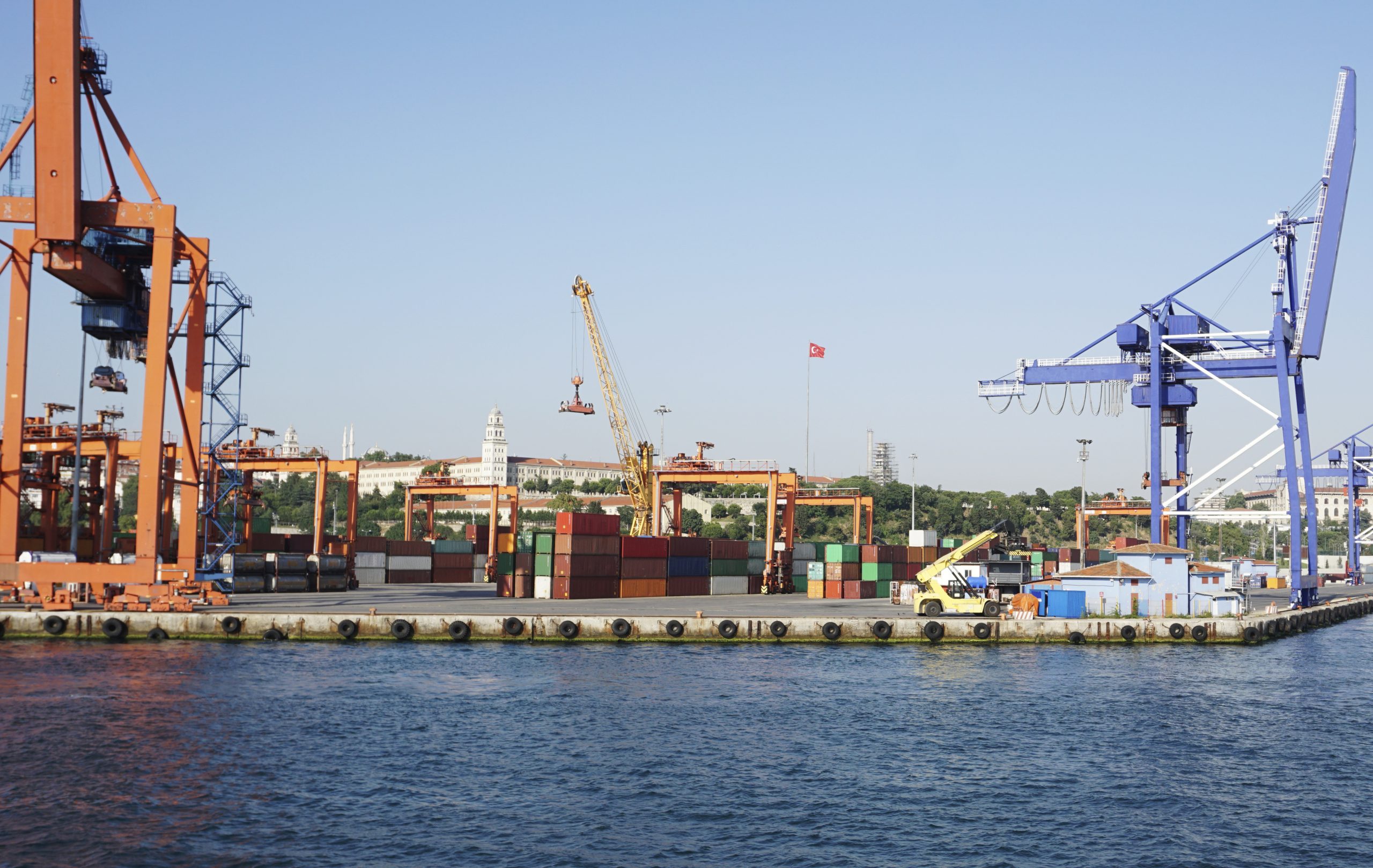
The Strait of Hormuz has also highlighted the importance of Southeast Asia's own maritime geography. The Strait of Malacca, the Luzon Strait and the waters surrounding the Indonesian archipelago are essential to Asian trade, connecting energy suppliers with manufacturing economies across the region.
The Strait of Malacca is particularly significant. It connects the Indian Ocean with East Asia and carries enormous volumes of energy and manufactured goods. The disruption in Hormuz gives companies another reason to examine how much of their supply chain depends on a single maritime corridor.
That has direct implications for infrastructure investment. Ports, warehouses, storage facilities, industrial parks and alternative transport routes become more valuable when manufacturers and distributors need greater flexibility. Companies that connect several Southeast Asian markets can also benefit as businesses spread production and sourcing across the region.
Singapore Shows Why Energy Resilience Matters
Singapore combines some of the region's strongest infrastructure, institutions, financial capabilities and logistics connections with significant dependence on imported natural gas.
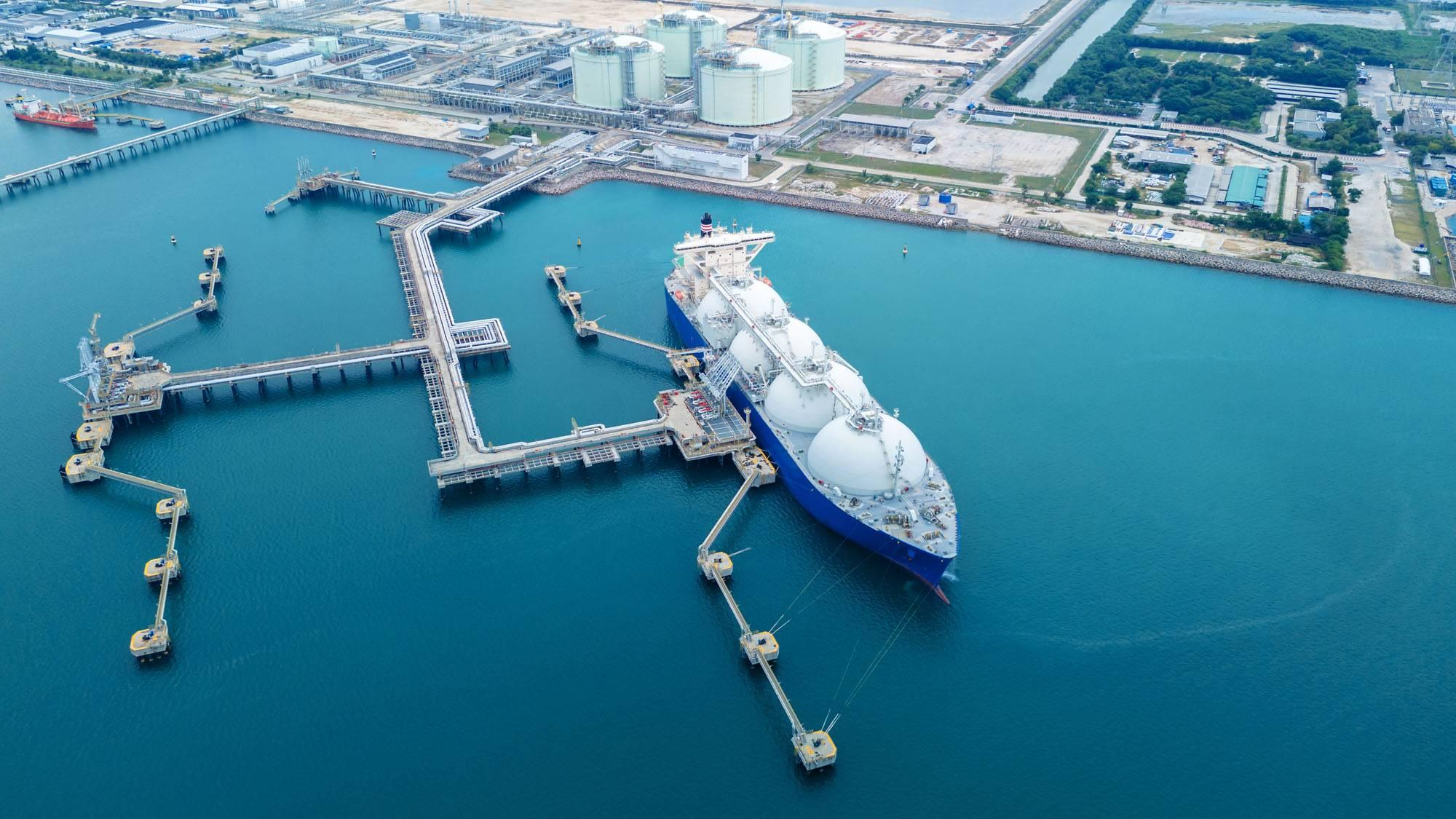
More than 95% of its electricity generation comes from natural gas, and nearly 60% of that gas was imported from Qatar before the current disruption. The attacks on Qatar's Ras Laffan LNG complex therefore created a direct energy vulnerability for one of Asia's most sophisticated economies.
Singapore's experience shows that resilience does not require complete self-sufficiency. Financial capacity, infrastructure, diversified procurement and strong institutions can make external dependence easier to manage.
For investors, the lesson is important: the volume of energy imports tells only part of the story. Alternative suppliers, infrastructure flexibility and the ability of businesses and governments to respond to disruption can be equally important.
Energy Security Could Create a New Infrastructure Investment Cycle
The immediate response to the crisis is focused on securing alternative energy supplies. The longer-term opportunity may come from the infrastructure required to make Southeast Asian economies less vulnerable to future disruptions.
The IEA describes the current crisis as a wake-up call for Southeast Asia's energy system. Energy investment is expected to reach record levels in 2026, with around $57 billion going into renewables, grids and end-use sectors. Approximately $22 billion is expected to go to renewables and $15 billion to electricity grids.
Renewable generation is only part of the opportunity. Southeast Asia needs stronger transmission networks, storage capacity, LNG infrastructure, diversified fuel supplies and more efficient energy systems. Electricity demand is also growing rapidly as manufacturing, data centres and broader economic development put additional pressure on existing grids.
Regional integration could become more important. The ASEAN Power Grid offers a framework for sharing electricity resources across borders and giving countries greater flexibility when domestic supplies are constrained.
This creates opportunities around the infrastructure supporting economic activity, from industrial parks and data centres to manufacturing facilities and logistics hubs.
Supply Chain Diversification Could Make Southeast Asia More Integrated
Southeast Asia's manufacturing opportunity has traditionally been described in terms of individual countries competing for investment. Supply-chain diversification is creating a more regional model.
A manufacturer could place electronics production in Vietnam, source specialized components from Malaysia, use Thailand's industrial ecosystem for another stage of production, distribute through Singapore and serve Indonesia's large domestic market. Such a structure requires more coordination than a single-country operation, but it gives companies more options when energy prices, shipping routes or individual markets become disrupted.
The region's economies complement one another. Vietnam has built a major electronics and manufacturing ecosystem. Malaysia combines semiconductor capabilities with energy resources. Thailand has deep automotive and industrial supply chains. Indonesia offers resources and market scale. Singapore provides finance, logistics and regional coordination.
This creates opportunities for logistics providers, warehouse operators, industrial-park developers, energy infrastructure companies and regional business-service providers. The next wave of investment may flow into the infrastructure and services that allow several Southeast Asian economies to function as parts of a more flexible production network.
What the Crisis Means for Southeast Asian Investment
The traditional investment checklist is not disappearing. Growth, labour availability, consumer demand, infrastructure and market access will continue to influence capital allocation.
The current crisis adds another set of questions. How dependent is the economy on imported energy? How concentrated are its suppliers? Can the electricity grid support new industrial demand? How much capacity exists in ports and storage facilities? How much fiscal room does the government have when energy prices rise?
The answers vary by sector. An energy-intensive manufacturer will pay close attention to power reliability and fuel exposure. A consumer company may be more concerned about inflation and household purchasing power. A logistics investor may focus on ports and alternative trade routes, while an infrastructure fund may look closely at government finances and long-term energy demand.
Domestic resources can provide a buffer against international energy volatility, although Malaysia's experience shows that even an energy-producing country can remain dependent on imports and maritime trade. Supplier diversity and strong infrastructure can reduce the cost of disruption, while fiscal capacity gives governments more room to support households and businesses.
What the Iran War Could Mean for Capital Allocation
Some of the most interesting opportunities may sit in businesses that help the region absorb disruption. Energy infrastructure, electricity grids, storage, logistics, industrial real estate, regional warehousing and supply-chain services can all benefit from companies placing a higher value on continuity.
Manufacturers with strong local ecosystems and diversified sourcing can also gain an advantage. A company that can secure energy locally, maintain several suppliers and move goods through more than one logistics corridor may have a stronger competitive position than a lower-cost competitor whose operations depend on a single route or source of supply.
Resilience is not replacing efficiency. Cost, productivity, labour availability, customer demand and return on capital remain fundamental. What is changing is the financial value attached to avoiding disruption.
A production stoppage, prolonged shipping delay or shortage of a critical input can be far more expensive than the operating savings achieved by maximizing concentration. That could direct more capital towards the infrastructure and services that make regional supply chains more flexible.
What Happens After the Iran War?
The immediate conditions created by the war will eventually change. Energy prices may stabilize, shipping routes may normalize and some of the extraordinary costs created by the disruption should decline.
The investment decisions made during the crisis will take much longer to reverse. A manufacturer that experiences a major supply disruption may diversify its suppliers permanently. A government that discovers weaknesses in its energy system may accelerate investment in domestic generation or strategic reserves. Companies that spend heavily to protect themselves from logistics delays may decide that additional inventory or production capacity is worth maintaining.
These changes can reshape the geography of investment without companies leaving Southeast Asia. The region's diversity may become a greater advantage as businesses distribute different parts of their operations across markets with different resource bases, energy systems and industrial capabilities.
Southeast Asia is already becoming more than an alternative manufacturing destination for companies reducing their dependence on China. It is developing into a network of markets that can collectively provide manufacturing capacity, resources, logistics, consumers and access to major Asian trade routes.
Final Thoughts
The Iran war is exposing differences across Southeast Asia that were already present but often received less attention than growth, labour costs and market size. Energy dependence, domestic resources, logistics infrastructure, fiscal capacity and supplier diversity are becoming much harder to separate from the investment case.
The opportunity for the region lies in the response. Companies are unlikely to abandon Southeast Asia because of the crisis. Many may instead deepen their presence while spreading production and sourcing across several markets. Governments have stronger reasons to invest in reliable power, storage, ports and transport infrastructure, creating opportunities across manufacturing, logistics, energy and industrial real estate.
The war will eventually recede from the headlines, but the investment decisions made because of it will remain. At Rodller, we see these shifts as part of a broader change in how companies approach international growth. Location is no longer simply a question of cost or market access. Increasingly, it is about combining competitiveness with resilience, flexibility and long-term strategic positioning. For companies considering Southeast Asia, that distinction could become one of the most important investment questions of the next decade.
About Rodller
Combine Deal Structuring, Fundraising, and AI Innovation, and you get Rodller. We use our AI Tech to scale both ambitious startups and Fortune 2000 companies with strategic and timely capital. Whether the goal is securing equity funding or debt, Rodller acts as your strategic Capital growth engine. Work with us for Deal Structuring, Data, and AI outreach to navigate your Capital expansion.




Leave a reply